Teaching and Learning at The Vineyard
At our recent Teaching and Learning Twilight, staff explored how we can continue to make learning as clear and effective as possible for all children through reducing cognitive load. Cognitive Load Theory, developed by educational psychologist John Sweller, explains that children’s working memory can only manage a limited amount of new information at one time. When instructions or explanations are too long, too complicated or presented all at once, children can become overwhelmed and important learning can be lost. Research from the Education Endowment Foundation, Rosenshine’s Principles of Instruction and the WalkThrus teaching guides all highlight the importance of clear, carefully sequenced teaching.
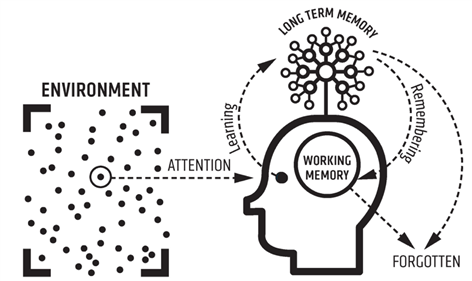
Our particular focus during this twilight was on teacher instructions and explanations. As adults, we have all experienced being given too many directions at once and immediately forgetting part of them. The same is true for children. In school, we support pupils by breaking learning into smaller steps, giving concise instructions, modelling examples clearly and checking understanding regularly before moving on. For example, in maths, teachers may model one step of a calculation at a time before children practise independently, while in writing lessons teachers may “think aloud” to model how to build a sentence or choose vocabulary.
This is why you may hear teachers at school:
- giving instructions in short chunks;
- repeating and rephrasing key points;
- using visuals or worked examples alongside explanations;
- checking children’s understanding before moving on;
- reducing unnecessary distractions on slides or resources;
- providing scaffolds and sentence stems to support thinking.
These approaches are not about making learning easier; they are about making learning clearer and more accessible. By reducing unnecessary cognitive load, children can focus their attention on the most important thinking and learning. Many of these approaches are already embedded across our classrooms and form part of our everyday practice, and we will continue to refine and develop them through evidence-informed research and professional dialogue within and beyond our professional development sessions, so that every child feels supported, successful and able to thrive as a learner.
Ms Reilly and Mrs Dempster
Assistant Headteachers for Teaching & Learning

 Please see this link if you are interested in singing tuition for your child – RMT